
Reviewed · ANCHORAGE
Sunset Photo Safari
Sunset in Anchorage looks different when framed right. This 4-hour photo safari pairs golden-hour views with real coaching, so you can turn summer skies and wildlife moments into sharper, better shots. I especially liked the chance to learn photo techniques on location instead of just talking about gear.
I also love the small-group limit of 10, which keeps questions from getting lost and makes it easier to adjust your camera settings as the light changes. You move through Anchorage’s best photography stops at a comfortable pace, with each stop giving you enough time to try a few approaches.
One thing to consider: it’s outdoors and can get cold, windy, and damp, and wildlife isn’t guaranteed. The tour still runs in all weather, so plan layers and be ready to focus on what you can control: framing, timing, and exposure.
In This Review
- Key Things I’d Highlight Before You Go
- Why Anchorage Works for Sunset Photos So Well
- The Pace, Weather Reality, and What to Wear
- Morning-But-Make-It-Evening Logistics: Where You Meet and How Pickup Works
- Stop 1: Point Woronzof for Anchorage Skyline and Chugach Mountain Light
- Stop 2: Potter Marsh Bird Sanctuary and the Wetland That Happened by Accident
- Stop 3: Chugach State Park Glen Alps for Panoramic Sunset Views
- Stop 4: Lake Hood Harbor for Float Planes at the World’s Busiest Seaplane Base
- Stop 5: McHugh Creek Recreation Area and Slow Shutter Waterfall-Style Effects
- What You Actually Learn From Guides Like Colin, Tyler, and Ben
- Value Check: Is $195 Worth It for a 4-Hour Evening?
- Who This Sunset Photo Safari Fits Best
- Should You Book Sunset Photo Safari?
- FAQ
- How long is the Sunset Photo Safari?
- How much does the tour cost?
- Where do I meet for the tour?
- Is hotel pickup available?
- Do they pick up from Airbnb?
- Are the places you visit included in the price?
- What group size should I expect?
- What should I do about weather?
- Is this tour suitable for kids?
- Can I bring a service animal?
- Is free cancellation available?
Key Things I’d Highlight Before You Go
- Hands-on coaching from working photographers: you get practical guidance, not just sightseeing
- Five strong Anchorage settings for sunset + wildlife: city skyline, bird sanctuary, mountain overlooks, float planes, and flowing water
- Small group, max 10: easier Q&A and more personal attention as conditions change
- Short, efficient photo windows: each stop is timed so you can experiment, then move on
- Snacks and optional hotel pickup: less stress during the early evening rush
- Technique practice you can reuse later: slow shutter ideas show up right where you need them
Why Anchorage Works for Sunset Photos So Well
Anchorage has a rare combo that makes sunset photography easier. You get big skies with strong color, plus locations that put something meaningful in the frame—mountains, birds, float planes, and water. That matters because a good sunset photo isn’t only about the sky. It’s about using the sky as a light source while you also tell a visual story in the foreground.
This safari leans into that. You’ll start with Anchorage city views and the Chugach Mountains nearby, then shift to wetlands for wildlife, then climb up to high overlooks, and finish with two classic “Alaska detail” scenes: float planes and cascading water. If you’ve ever felt like your sunset shots look flat or ordinary, this format gives you multiple chances to correct course fast.
And because the tour is led by a professional photographer, you’re not left guessing why a photo worked or didn’t. You get ideas you can try immediately, like adjusting shutter speed for moving water or using steadier support for changing light.
Other ways into an Alaska evening
The Pace, Weather Reality, and What to Wear
This is about an evening session of around 4 hours, with several short stops. That timing is a feature, not a flaw. It keeps the tour moving while the light is actually changing, and it gives you multiple “try again” moments. It also means you should arrive with a plan for your camera so you’re not wasting the good minutes fiddling.
Weather is a big deal in Anchorage, and this tour runs in all weather conditions. You’ll want layers you can move in, plus something that handles wind. On windy mountain evenings, the cold can sneak up on you fast, even in summer. In the past, guides even brought hot chocolate back to the car on a rough day, which tells you they expect real conditions—not just perfect sunset weather.
Also, mosquitoes can be intense in Alaska’s warmer months, so bring repellent. Comfortable footwear matters too, since you’ll be taking photos from viewpoints and nearby areas where you’ll likely stand, walk a bit, and adjust your position for the shot.
Finally, this isn’t recommended for travelers with severe mobility problems, and it’s not recommended for child age 8 and under. If your group includes someone who can’t stand outdoors for short bursts, you might want to choose a gentler alternative.
Morning-But-Make-It-Evening Logistics: Where You Meet and How Pickup Works
You meet at the Visit Anchorage Log Cabin Visitor Information Center (546 W 4th Ave, Anchorage, AK 99501). The tour ends back at the same starting point, so you’re not dealing with a half-day transit headache.
If you select hotel pickup, it’s offered. Pickup is primarily at the Log Cabin Visitor Information Center, and hotel pickup works upon request. There’s also a specific note about Airbnb pickup: they only pick up at an Airbnb if it’s near a hotel in Downtown, Midtown, or Spenard. That’s worth checking when you book so you don’t end up playing phone tag while you’re waiting for dusk.
The tour uses a mobile ticket, and you’ll get confirmation at booking. One more practical point: this experience is often booked far in advance (on average about 114 days). If you’re traveling during peak season, don’t wait until the last week.
Stop 1: Point Woronzof for Anchorage Skyline and Chugach Mountain Light
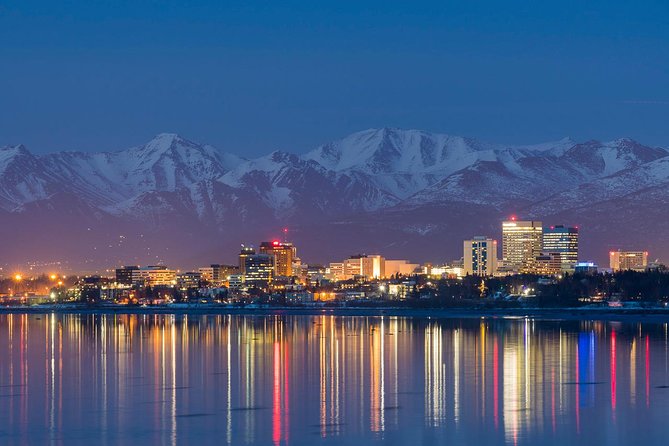
At Point Woronzof, you start where Anchorage looks dramatic. You’re photographing the Anchorage skyline with the Chugach Mountains as your backdrop, using evening light to add depth. This stop is short—about 20 minutes—but it’s a strong way to kick off the session because city light changes quickly as the sun drops.
What’s smart here is the “warm-up” effect. Before you head into bird areas and mountainous overlooks, you practice getting a city-and-mountains composition. The tips you’ll likely hear from your guide can help right away, like how to keep foreground detail sharp while managing darker sky areas. If you’re using a phone, you’ll still benefit from learning where to place the horizon and how to control exposure so the sky doesn’t blow out.
If you love the idea of a skyline photo but hate how your shots turn into silhouettes or blurry mush at dusk, this first stop gives you a controlled place to fix that. You’ll have time to try more than one setting instead of treating the sunset like a one-shot deal.
Stop 2: Potter Marsh Bird Sanctuary and the Wetland That Happened by Accident
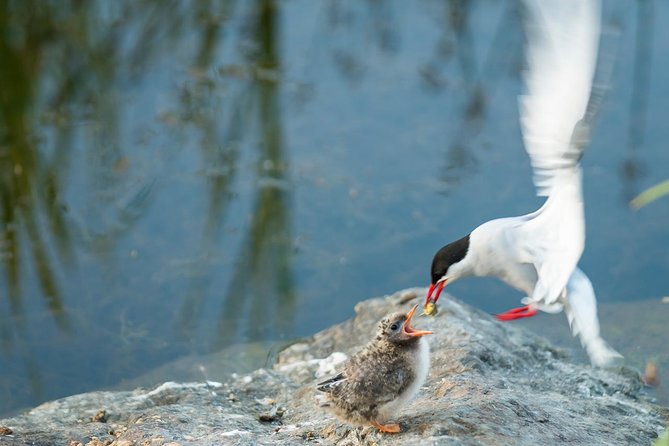
Potter Marsh is where the tour shifts from city glow to wildlife-focused photography. You’ll spend about 30 minutes at the Potter Marsh Bird Sanctuary, a migratory bird nesting area created by the Alaska Railroad. That “accidental wetland” origin is part of what makes it interesting: nature used a man-made change, and now you get a real habitat.
Expect birds and other wildlife activity when conditions cooperate. For photography, this stop teaches you a skill that matters everywhere else: readiness. Birds don’t pose on schedule, so it helps to learn how to react quickly without letting your camera drift out of the settings that work in fading light.
You’ll likely shoot faster-moving subjects than you would at a scenic overlook. That makes it a good place to practice timing—choosing shutter speeds that can handle motion—and composing with enough space in the frame so you aren’t constantly chopping off wings or tails.
One practical note: wildlife can be quiet on some evenings. On some trips people have seen impressive animals like eagles, moose up close, and even reports of whales (including a Beluga sighting on an evening when conditions lined up). Still, don’t plan around guaranteed sightings. Plan around improving your odds and your technique, then let wildlife be a bonus.
Stop 3: Chugach State Park Glen Alps for Panoramic Sunset Views
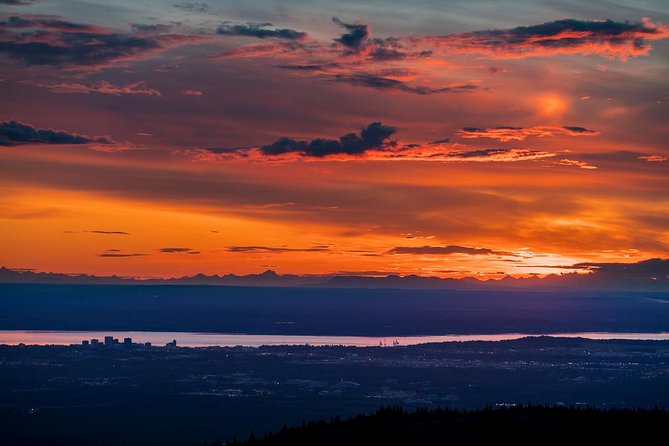
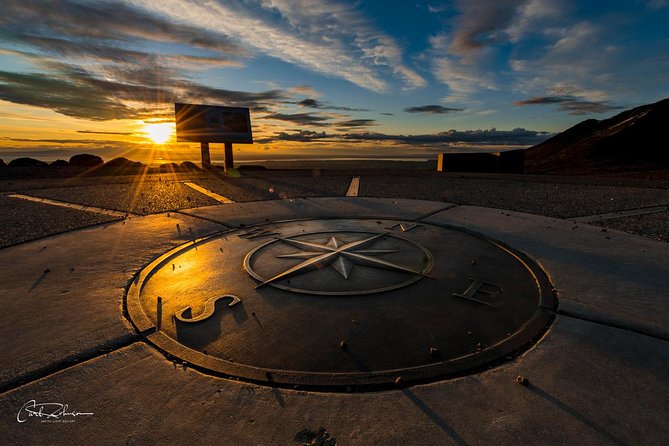
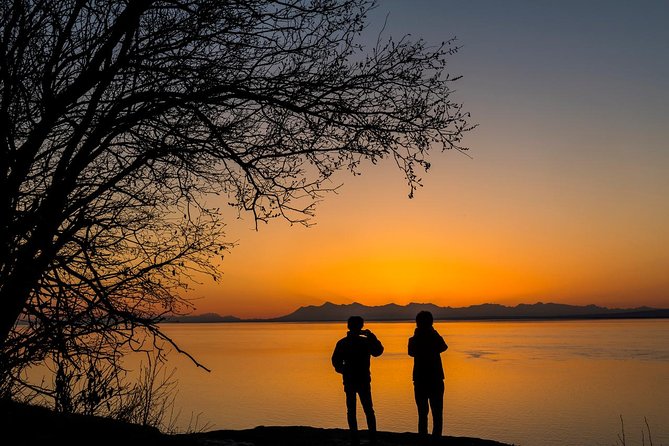
Next comes elevation: about 30 minutes at Chugach State Park in the Glen Alps area. This is a classic Anchorage moment—high enough for panoramic views over the city and Cook Inlet at sunset. When you climb like this, your camera work changes. The air can be clearer, but the wind can be harsher, and the light can shift fast enough that you’ll want to lock in settings quickly.
This stop is ideal if you want photos that show scale: not just Anchorage buildings, but the larger geography. You’ll often be balancing bright sky tones with darker land details. That’s where guidance from a pro photographer helps most. You can learn how to protect highlights in the sky and still keep foreground detail from turning into a dark smear.
Also, this is a good stop for practicing “multiple versions” of the same scene. A guide might encourage you to try one wider shot, one framed tighter, and one experiment with different exposure settings. The time window is short, so you’ll benefit from having your camera set up before you arrive.
Stop 4: Lake Hood Harbor for Float Planes at the World’s Busiest Seaplane Base
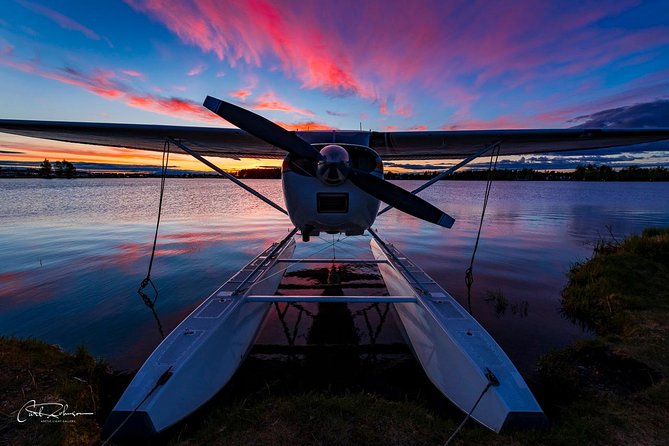
Lake Hood Harbor is one of the most visually fun stops on the safari. You’ll photograph the iconic Alaskan float plane scene at the busiest seaplane base in the world. It’s about 25 minutes, which is long enough to catch arrivals, takeoffs, and the way planes cut through sunset light.
This is where you’ll likely appreciate what your guide brings beyond composition. Photographing airplanes isn’t only about pointing your camera. It’s about thinking about motion, timing, and the angle where the aircraft’s shape looks best against the background. At dusk, float planes can look especially striking because the sky is changing and reflections can add depth.
If you struggle with motion blur or your background always steals attention from your subject, this stop gives you a repeatable lesson: use a clean background, shoot with a shutter speed that matches the motion, and don’t let the plane become a random streak in the frame.
Even if you’re mostly using a phone, you can still benefit from guidance here. You’ll learn how to avoid overexposed sky and how to keep the plane readable in the shot.
Stop 5: McHugh Creek Recreation Area and Slow Shutter Waterfall-Style Effects
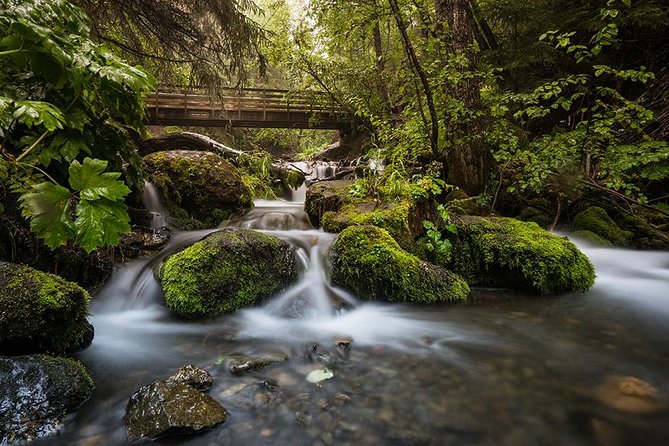
The final stop, about 30 minutes at McHugh Creek Recreation Area, focuses on a technique you can reuse anywhere: slow shutter photography. You’ll learn how to photograph water cascading down a craggy mountainside. This is a favorite kind of lesson because it’s practical. You’re not imagining the effect—you’re standing in front of the exact subject.
For this stop, support matters. One guide even lent a tripod to help a guest get better results. That kind of tip is gold, because long exposures are where handheld shooting usually falls apart. If you’re using a tripod or you’re steady with your camera, you can try multiple exposures to see how much blur you like in the moving water.
This stop also helps you understand light and motion together. At sunset, the light drops quickly, which can tempt you to use slower shutter speeds naturally. A pro guide can help you avoid common mistakes, like using the wrong shutter speed for the look you want or forgetting to stabilize your framing so the scene doesn’t turn soft.
And it’s a strong closer emotionally. After chasing skyline, birds, planes, and mountains, you end with something that looks calm even when it’s moving—exactly the kind of contrast that makes photos feel complete.
What You Actually Learn From Guides Like Colin, Tyler, and Ben
The strongest praise across the experience is about the guides and the way they teach. People specifically called out how guides like Colin, Tyler, Ben, Harry Walker, and Jody took time to explain photo choices and help with real-world shooting.
Here are the kinds of lessons that tend to make this tour feel like more than a short sightseeing drive:
- Actionable camera tips, tied to what’s in front of you right now
- Gear support, like lending a tripod when it helps someone get sharper results
- Patient coaching, especially when your camera settings don’t behave the way you expected
- Extra time for the afterglow, so you’re not forced to leave the best light too early
One review mentioned a guide helping someone set up a walk for an overlook and staying through the glow after sunset. That’s not trivial. The “afterglow” can be the part that makes a photo look cinematic, and guides who understand that timing usually manage the stops to give you that chance.
You’ll also learn how to look beyond the obvious shots. Several people talked about capturing details they weren’t even focused on at first, which is exactly what a good photo guide should do. They get you to see the scene as layers: sky, subject, foreground, and motion.
Value Check: Is $195 Worth It for a 4-Hour Evening?
At $195 per person for about 4 hours, you’re paying for three things: expert guidance, prime locations, and the small-group format. The tour includes a professional photographer guide, a local guide, snacks, and state park fees. Each stop also lists admission as free, which keeps the experience simple: you’re not doing math mid-trip.
Is it “cheap”? No. But it can be good value if you care about photography outcomes. A four-hour coaching session with someone who can correct your settings on the spot usually costs more than this in most travel contexts. Plus, you’re not only learning technique—you’re getting a route built around sunset light and wildlife chances.
Small-group size matters here. With a maximum of 10 people, you’re more likely to get direct feedback instead of generic tips. That’s a real value lever when you’re trying to improve your photos rather than just collect snapshots.
If you’re traveling as a couple, a solo photo hobbyist, or a small family group (with kids over age 8), it can feel like an efficient, memorable “camera class” that still gives you Anchorage.
Who This Sunset Photo Safari Fits Best
I think this tour fits best if you fall into one of these groups:
- You want better photos but you don’t want a full-day workshop
- You have a camera or phone and you’re ready to learn settings and timing
- You like wildlife even if you understand sightings aren’t guaranteed
- You want to see multiple Anchorage areas in one guided evening
It’s also a good match for different skill levels. People brought different gear and different confidence, and the guide style still worked. That’s a sign the coaching isn’t only for experts. It’s built around helping you get results with what you have.
If you’re purely there for a relaxed stroll with no desire to manage camera settings, you might find the photo instruction a bit “hands-on” for your taste. But if you like learning while you look, this is a sweet spot.
Should You Book Sunset Photo Safari?
Yes, I’d book it if you want a focused Anchorage evening where your photos should improve. The combination of professional coaching, a small group, and stop-by-stop practice at strong sunset locations is exactly the kind of structure that helps people move past frustrating trial and error.
I’d hesitate only if you know you can’t handle cold wind outdoors, or if your group includes someone who struggles with walking or standing for short stretches. And if you’re expecting guaranteed wildlife, temper that. This is about improving your odds and your technique—wildlife happens when it happens.
If you’re ready to work with the light and learn from a guide who actually shoots, the $195 price looks fair for what you get. Book early for best availability, grab layers, and keep an open mind. Anchorage sunset photos are already gorgeous here, but the coaching is what makes them better.
FAQ
How long is the Sunset Photo Safari?
It runs for about 4 hours.
How much does the tour cost?
The price is $195.00 per person.
Where do I meet for the tour?
You meet at Visit Anchorage Log Cabin Visitor Information Center, 546 W 4th Ave, Anchorage, AK 99501.
Is hotel pickup available?
Pickup is available if you select the option, and it is offered upon request. The primary pickup location is the Log Cabin Visitor Information Center.
Do they pick up from Airbnb?
Yes, but only if the Airbnb is near a hotel in Downtown, Midtown, or Spenard areas.
Are the places you visit included in the price?
State park fees are included, and the stop admissions listed are free.
What group size should I expect?
The tour has a maximum of 10 travelers.
What should I do about weather?
The tour operates in all weather conditions, so dress appropriately. The experience also requires good weather, and if it’s canceled due to poor weather, you’ll be offered a different date or a full refund.
Is this tour suitable for kids?
It is not recommended for children aged 8 and under.
Can I bring a service animal?
Service animals are allowed.
Is free cancellation available?
Yes. You can cancel up to 24 hours in advance for a full refund.
When Alaska Nights Draw In
- Ultimate Anchorage Winter Wildlife & Sunset Tour★ 5.0 · 21 reviews
- Anchorage: Kenai Fjords & Denali National Park 5 Day 4 Night Tour★ 5.0 · 9 reviews
More Tour Reviews in Anchorage
- Anchorage Trolley Tour★ 4.5 · 2,607 reviews
- Wildlife and Glaciers with a walk in the Rainforest★ 4.5 · 719 reviews
- Dog Sledding Adventure in Willow, Alaska★ 5.0 · 398 reviews
- Grand Knik Helicopter Tour – 2 hours 3 landings – ANCHORAGE AREA★ 5.0 · 374 reviews
Fresh Off the Ice: New Anchorage Reviews
- Northern Lights UTV Tour with Roundtrip Transportation
★ 5.0 · 3 reviews - Knik River Lazy River Float Trip
★ 5.0 · 3 reviews - From Anchorage: Chugach State Park Walk with Naturalist
★ 5.0 · 3 reviews - Anchorage: Scenic Tour to Wildlife Center with hotel pickup
★ 5.0 · 3 reviews - Anchorage Brews Tour
★ 5.0 · 3 reviews - Full Day Guided Kayak Tour on Knik River
★ 5.0 · 3 reviews