
Reviewed · MATANUSKA GLACIER HIKES
Matanuska Glacier Backcountry Ice Climbing
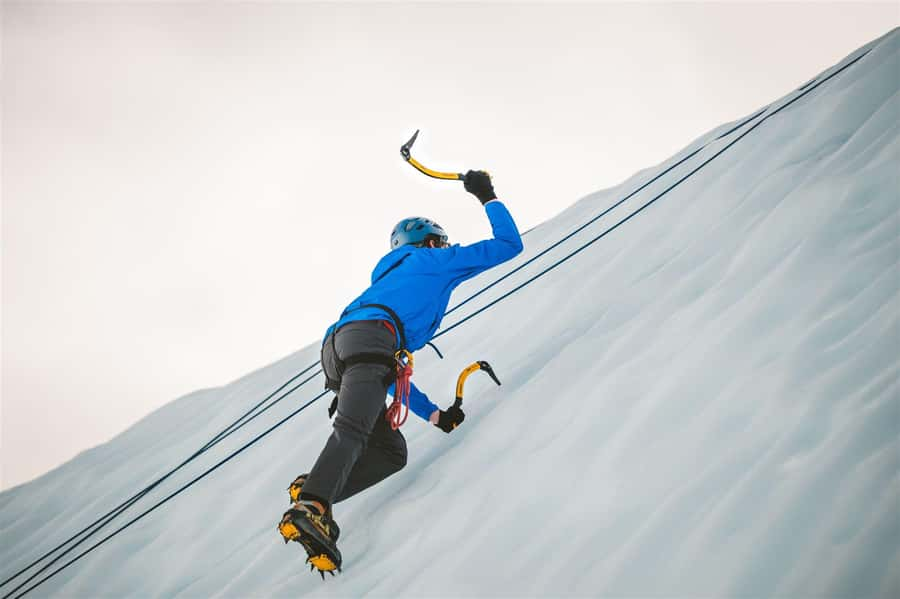
Ice climbing makes you sit up straight.
On the Matanuska Glacier, this is an intense but beginner-friendly day that gets you onto real ice with personal instruction. I like the 1:4 guide-to-guest ratio, which means you’re not just watching from the sidelines, and I also like that the focus is fundamentals: crampons on, tools in hand, and safe technique that makes the wall feel possible. The main drawback to plan for is cost creep: the advertised price doesn’t include the Matanuska Glacier Park gate fee, which you pay per person.
You start at NOVA Alaska Guides and ride out in a van, then spend about 7 hours total on the glacier experience. Expect a trek over rocky moraine and past the bright glacier face into a more rarely visited backcountry area, where the ice features shift as the glacier moves and melts. If you’re excited to learn, it’s a great fit, but if you’re dealing with heart issues, you’re over the age limit, or you’re outside the weight range, this isn’t the right adventure for you.
In This Review
- Highlights that make this Matanuska ice climb feel worth it
- Why Matanuska Glacier is such a good training ground
- The 8-hour flow: van, safety talk, glacier time
- The hike to the climbing zone: moraine walking, not just standing on ice
- Gear you don’t have to rent or guess about
- The safety system and anchor setup (what makes it beginner-safe)
- Learning vertical ice: crampons, axes, and how you actually climb
- Backcountry feel: shifting ice features and changing walls
- Price and park fees: what you should budget before you go
- Who this is for (and who should skip it)
- What to pack: warm layers, cold hands, and real glacier sun
- The guide experience: what “good instruction” looks like
- Should you book the Matanuska Glacier backcountry ice climb?
- FAQ
- Do I need any prior ice-climbing experience?
- How long is the tour?
- What climbing gear is included?
- Where do I meet for the tour?
- Is the glacier park entrance fee included in the $249 price?
- Is there a drone policy?
- Can I change my plans after booking?
Highlights that make this Matanuska ice climb feel worth it
- No experience needed: this is an introductory clinic built for first-timers
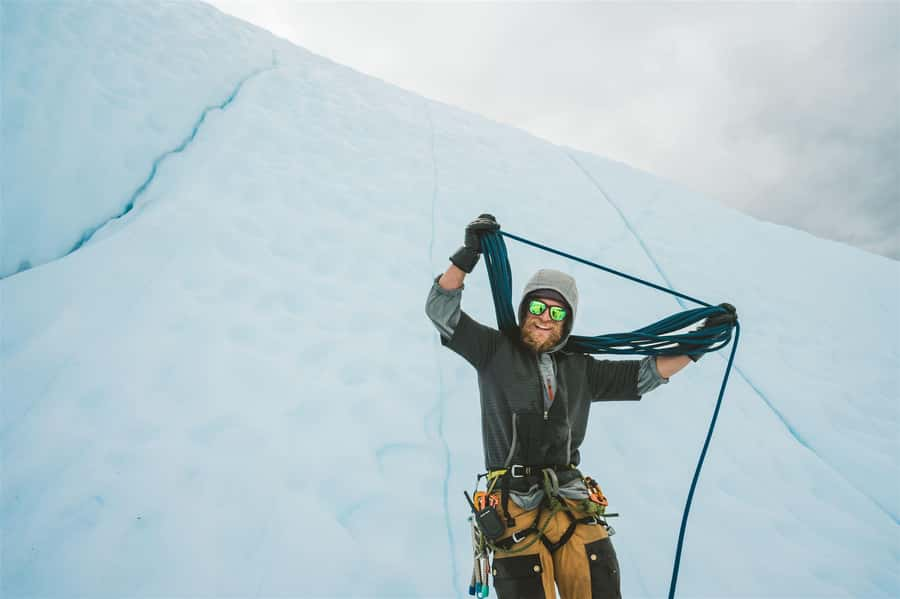
- Hands-on coaching: guides teach you on the spot, not from a distance
- Real backcountry time: you trek over moraine and into evolving ice features
- Big gear package included: crampons, helmets, harness, ropes, tools, hardware
- Beginner-intermediate wall length: lower-angle walls with 50+ feet of climbing
Why Matanuska Glacier is such a good training ground
Matanuska Glacier sits in the Chugach Mountains about 100 miles north of Anchorage, and it’s one of Alaska’s more accessible glaciers on foot. It’s a 26-mile-long advancing valley glacier, which matters because it creates enough ice structure to climb without forcing you into pure technical mode right away.
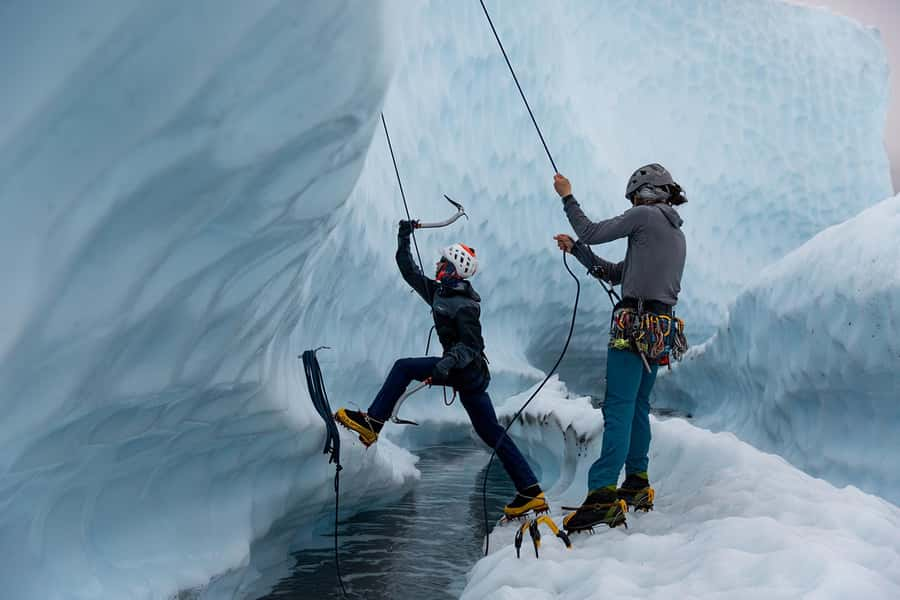
The setup is designed for learning. The day includes lower-angle walls (with 50+ feet to work on) and quick-to-set anchor systems. That combination is what helps a first-timer progress fast, because you spend your energy practicing instead of wrestling with complicated systems.
Also, you’re climbing in the warm summer months. That can sound strange until you’re there: you get long daylight, and the glacier still offers its own cold, crisp challenge. In other words, you get the Alaska experience without it turning into an all-day whiteout.
More boots-on-ice days at the Matanuska
The 8-hour flow: van, safety talk, glacier time
This is a full-day outing, and the timing is built around getting you moving, geared up, and then working on ice.
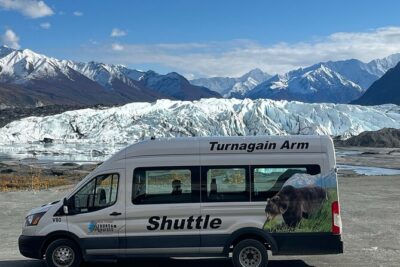
Starting at NOVA Alaska Guides, you meet at Mile marker 96.5 Glenn Hwy near Hick’s Creek bridge. From there, you hop in a van for about 15 minutes. That short ride is useful. You arrive while you’re still thinking clearly, get organized, and then settle into the glacier day.
Once you reach the glacier area, you get a safety briefing (about 15 minutes). This isn’t a quick shrug-and-go. It’s the part where you’re reviewed on how the day works and how guides will manage safety while you’re roped and equipped.
Then the main event kicks in: roughly 7 hours guided on the ice. In that time, you’ll hike in, get set up at the climbing area, and then climb using the provided gear. You also have time for instruction and practice because of the 1:4 guide-to-guest ratio. That ratio is the reason beginners usually feel like they can ask questions without feeling rushed.
The hike to the climbing zone: moraine walking, not just standing on ice
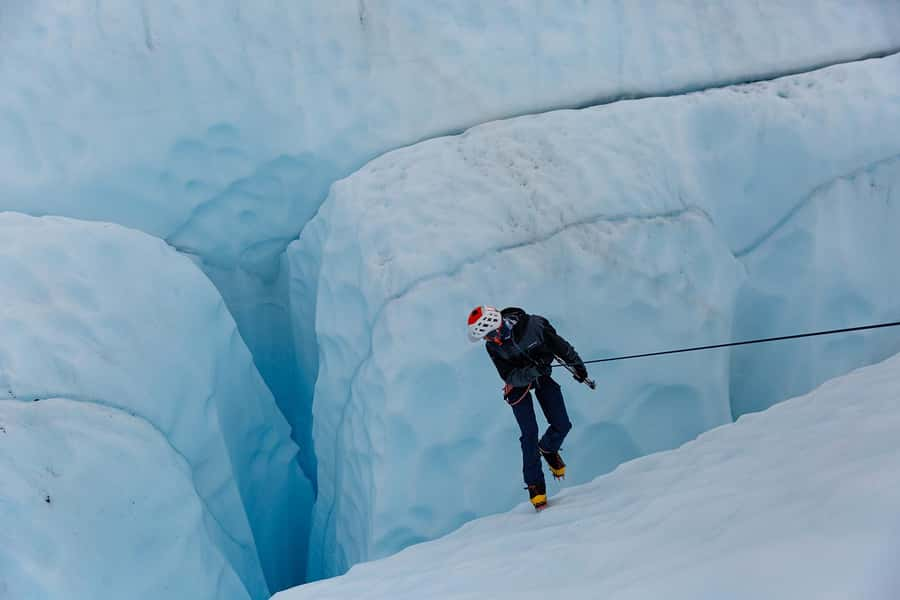
Before you clip into the action, you move over uneven terrain. Reaching the climbing areas means a trek across rocky glacial moraine and past the white glacier face, then into the backcountry climbing zone.
Here’s the part people sometimes underestimate: you’re not only “climbing,” you’re also hiking on glacier terrain. One guide described the walk to the spot as about a mile up and down across hills and glacier ground, and that sounds about right for what this kind of clinic feels like. You don’t need to be a mountaineer. You do need to be ready to walk on uneven footing while wearing crampons later.
Why this matters: if you bring the right clothing (warm layers and rain gear), you keep your energy for the climb instead of getting cold and shaky before you ever get on the wall.
Gear you don’t have to rent or guess about
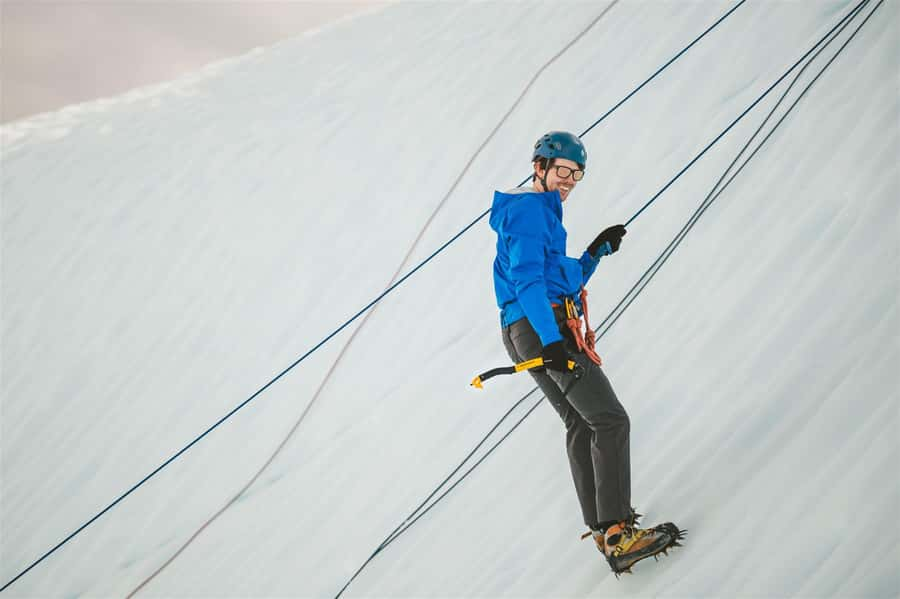
This tour includes all the gear and equipment you need. That’s a big value point, especially for first-timers who don’t yet know what feels right.
You’re outfitted with hiking boots, crampons, a helmet, ice axes, a harness, climbing ropes, and the hardware for the rope system. You don’t have to source rental gear in advance. You show up, get fitted, and then focus on learning.
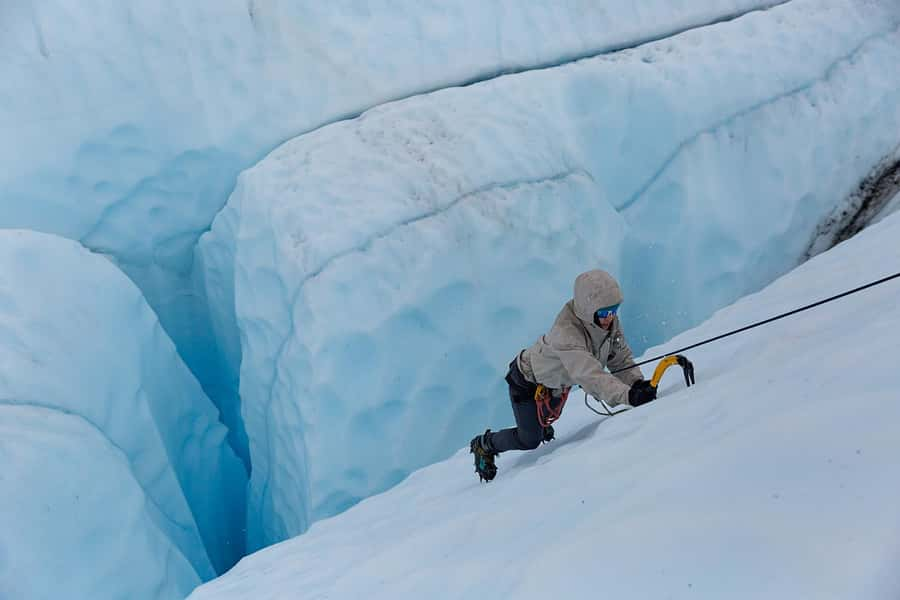
If you’ve never put crampons on, you’ll likely be surprised by how much you can feel the difference immediately. Reviews highlight guides teaching how to put crampons on, plus how to use climbing hooks and tools. It’s a practical teaching approach. You learn the motion before you need to trust it.
The safety system and anchor setup (what makes it beginner-safe)
This isn’t a technical glacier course. The goal is introductory ice climbing, and the guides run a safety-first setup.
The anchor systems are designed to be quick to set up, taking only a few minutes once everything’s in place. That speed matters because it reduces time spent waiting and increases time spent practicing technique.
You’ll also get guided attention right when you need it most. With the 1:4 ratio, there’s usually time for direct corrections like foot placement, tool angle, and body position on the wall. That’s the difference between feeling like you’re doing it wrong and learning what “right” actually looks like.
Keep expectations grounded: you’re training on appropriate lower-angle walls for beginners and intermediate climbers, not attempting a mountaineering-style glacier traverse on your own.
Learning vertical ice: crampons, axes, and how you actually climb
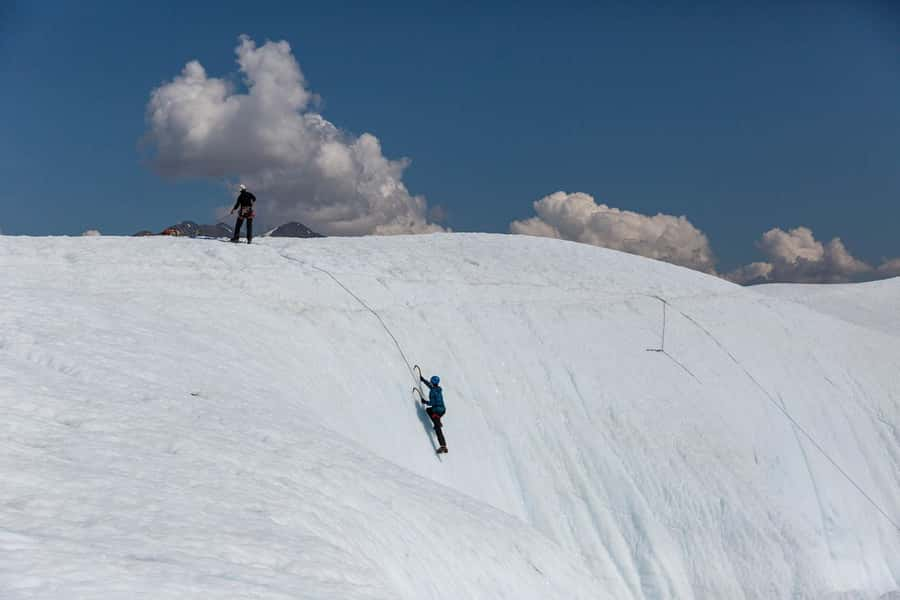
The best part of an ice-climbing clinic is that you get immediate feedback. You’re not just shown. You’re coached.
Instruction starts with fundamentals you can use right away:
- how to secure crampons properly
- how to handle ice axes safely
- how to use climbing hooks
- how to move on the wall with controlled placements
In one experience, the guide Ben was praised as professional, patient, and caring, and the learning list matched exactly what a beginner needs: tools, crampons, then technique. Another guide, Thomas, was praised for adjusting the pace to skill level and adding glacier context while still keeping the focus on safe climbing.
The wall itself is where it clicks. With lower-angle walls and 50+ feet of climbing, you get enough length to feel the rhythm of placements rather than just doing a short scramble and being done. And because you’re roped and equipped, you can commit to the movements without turning it into a fear test.
Backcountry feel: shifting ice features and changing walls
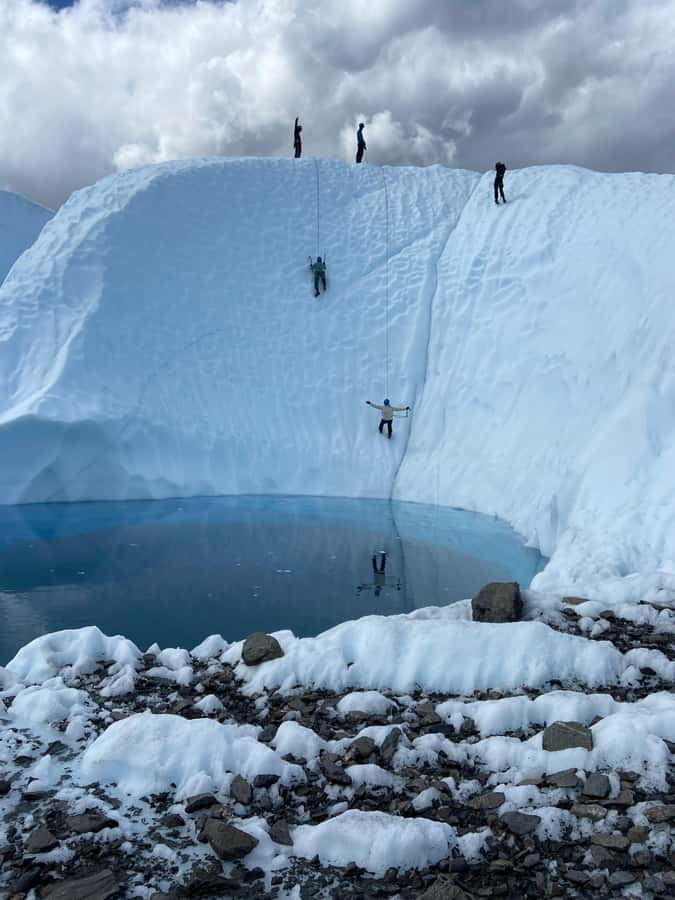
The Matanuska Glacier is active, and that shows up on the climb. The glacier features constantly shift, and the climbing walls evolve as the glacier’s landscape changes.
That means the “route” is never exactly the same. Even within the same climbing area, you might find different ice formations from day to day. From a learning standpoint, that’s helpful. It keeps you from memorizing one perfect sequence and encourages you to read the ice and place tools with intention.
From a pure experience standpoint, it’s also the reason the day feels intimate. You’re on foot, moving through a glacier environment where the ice is doing its own work under your feet. It’s striking in a quiet, practical way: you look, you test with your tools, you place, you climb.
Price and park fees: what you should budget before you go
The base price is $249 per person for the 8-hour guided backcountry ice climb with all gear included and a trip shuttle to the glacier. For first-timers, that’s strong value because equipment rental and specialist coaching aren’t cheap anywhere in Alaska.
But budget for the glacier park entrance fee. Matanuska Glacier Park is privately owned and charges per person each time you go through the gate. Alaska State passes do not apply, and you pay the fee at trip check-in.
The fee schedule listed is:
- Regular entry fee: $55 per person (adults 17+)
- Teens (13–16): $25
- Alaska residents, military, and seniors (65+): $30
One more thing: the tour has a no-drone policy for the glacier. If you’re the type who brings a drone everywhere, this is the kind of place where that idea has to stay at home.
When you total it up, the biggest value question becomes this: do you want a coached, gear-included climb with a small guide ratio? If yes, the price makes sense fast.
Who this is for (and who should skip it)
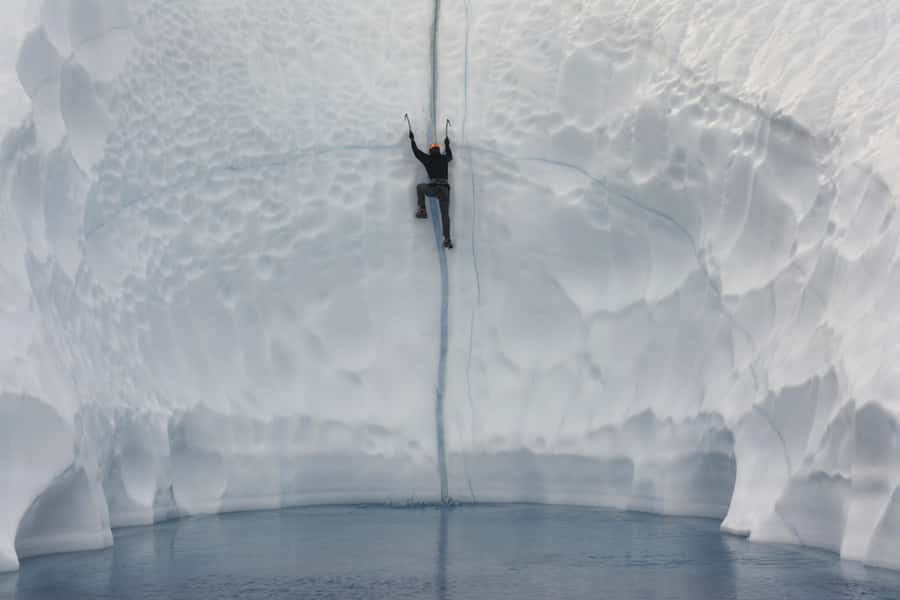
This is a great choice for beginners and for people who want an introduction clinic in a controlled, guided setting. The activity is explicitly for beginner ice climbing and intermediate-friendly wall conditions, and it’s designed so you don’t need prior experience.
That said, it has clear limits:
- Not suitable for children under 12
- Not suitable for people with heart problems
- Not suitable for people over 65
- Not suitable for under 99 lbs (45 kg)
- Not suitable for over 250 lbs (113 kg)
If you’re within those boundaries and you can dress for cold and uneven terrain, you’re likely to enjoy the pace. If any exclusion applies, it’s worth choosing a different glacier experience that fits your situation.
What to pack: warm layers, cold hands, and real glacier sun
Even in summer, glaciers have their own kind of chill. Plan to dress for warmth and wet weather.
Bring:
- warm clothing
- rain gear
- gloves
- water
- hat and sunglasses
- sunscreen
- a small pack for personal items like snacks and cameras
The sun can still catch you, especially around ice. Sunglasses and sunscreen are not optional-feeling accessories here; they’re comfort tools.
Also, if you’re bringing a camera, you’ll want it accessible. You’re on ice, and the views tend to happen when you’re focused on technique—so grab the chance when the guide gives a moment.
The guide experience: what “good instruction” looks like
The standout from the experiences I’m using to judge quality is how personal the instruction feels.
With 1:4 guide-to-guest attention, you get feedback you can actually use while your hands and feet are still learning. Reviews praised guides for being fun, informative, professional, and patient. Ben was called out for helping a first-timer a lot, including teaching crampons and tools. Thomas was praised for tailoring to skill level and for sharing glacier history and ecology, which adds meaning beyond just learning how to climb.
That blend matters. If all you do is climb, it can feel like a workout. If you also understand what you’re looking at—how the glacier environment works and why the ice changes—you come away with a richer memory.
Should you book the Matanuska Glacier backcountry ice climb?
Book it if you want a first ice-climbing day that feels safe, coached, and hands-on. The combination of beginner-friendly walls, all gear provided, and a small 1:4 guide ratio is what makes this a strong value for learning real technique instead of just sightseeing.
Skip it if you’re outside the stated age or weight limits, have heart problems, or you want a glacier experience with no physical trekking component. Also, if you’re planning to bring a drone, don’t. The no-drone rule is firm.
If you can handle a long day, dress for cold and wet conditions, and keep an open mind about moving over rough glacier terrain, you’ll likely leave feeling like you did something genuinely Alaska, with skills you can build on.
FAQ
Do I need any prior ice-climbing experience?
No experience is necessary. This is an introductory backcountry ice-climbing experience with instruction, safety guidance, and beginner-appropriate climbing walls.
How long is the tour?
The total duration is 8 hours, including a safety briefing and guided time on the glacier.
What climbing gear is included?
The tour provides hiking boots, crampons, helmets, ice axes, harnesses, climbing ropes, and hardware.
Where do I meet for the tour?
Meet at NOVA Alaska Guides. The directions provided are: Mile marker 96.5 Glenn Hwy, turn into Trailhead Rd at Hick’s Creek bridge, follow the driveway that loops under the bridge, then proceed to the camp entrance.
Is the glacier park entrance fee included in the $249 price?
No. Matanuska Glacier Park entrance is privately owned and charges per person each time you go through the gate. Fees are paid at trip check-in, and Alaska State passes do not apply. Adults (17+) are $55, teens (13–16) are $25, and Alaska residents, military, and seniors (65+) are $30.
Is there a drone policy?
Drones are not allowed. The outfit has a no-drone policy in place for the glacier.
Can I change my plans after booking?
Yes. There’s free cancellation up to 24 hours in advance for a full refund, and you can reserve now and pay later.
More Tour Reviews in Anchorage
- Anchorage Trolley Tour★ 4.5 · 2,607 reviews
- Wildlife and Glaciers with a walk in the Rainforest★ 4.5 · 719 reviews
- Dog Sledding Adventure in Willow, Alaska★ 5.0 · 398 reviews
- Grand Knik Helicopter Tour – 2 hours 3 landings – ANCHORAGE AREA★ 5.0 · 374 reviews
Boots on the Matanuska
- Full-Day Matanuska Glacier Hike And Tour★ 5.0 · 216 reviews
- Hike Matanuska Glacier w/Alaska Local Honey, Wine Tasting★ 5.0 · 89 reviews
- All Day Matanuska Glacier Hike from Anchorage★ 5.0 · 66 reviews
- Matanuska Glacier Summer Tour★ 5.0 · 64 reviews
Fresh Off the Ice: New Anchorage Reviews
- Northern Lights UTV Tour with Roundtrip Transportation
★ 5.0 · 3 reviews - Knik River Lazy River Float Trip
★ 5.0 · 3 reviews - From Anchorage: Chugach State Park Walk with Naturalist
★ 5.0 · 3 reviews - Anchorage: Scenic Tour to Wildlife Center with hotel pickup
★ 5.0 · 3 reviews - Anchorage Brews Tour
★ 5.0 · 3 reviews - Full Day Guided Kayak Tour on Knik River
★ 5.0 · 3 reviews
Matanuska Glacier Hikes, compared.
 ★ 5.0Hike Matanuska Glacier w/Alaska Local Honey, Wine TastingFrom $31089 reviews
 ★ 5.0All Day Matanuska Glacier Hike from AnchorageFrom $32966 reviews
 ★ 5.0Matanuska Glacier Summer TourFrom $37664 reviews
 ★ 5.0Winter/Summer Matanuska Glacier Hiking AdventureFrom $34739 reviews
 ★ 4.7Matanuska Glacier Hike with TransfersFrom $32920 reviews
 ★ 5.0From Anchorage: Matanuska Glacier Winter Tour with LunchFrom $35415 reviews
 ★ 5.0Matanuska Glacier Adventure TrekFrom $22512 reviews
 ★ 4.5Matanuska Glacier Ice Fall TrekFrom $29910 reviews
Browse the lists this tour appears in