
Reviewed · KNIK GLACIER TOURS
Anchorage: Knik Glacier Helicopter and Paddleboarding Tour
Alaska has a way of making you forget your phone and your schedule. This one mixes helicopter access with paddleboarding on Knik Glacier pools, so you get the adrenaline and the quiet, side by side. I like how the day is structured around safety gear and step-by-step practice, and I also like the sense of getting to a real, remote place instead of just looking at ice from a distance. The main drawback to plan for is that it’s weather-dependent and you’re outside for up to 4 hours in extreme cold.
In practical terms, you’ll check in at Alaska Glacier Lodge, fly from the Knik River Lodge area, land on the glacier, then gear up and spend time both learning and moving through icy terrain. The group stays small (up to 7 people), and the vibe is built for first-timers and returning paddlers alike.
Key things to know up front: you’ll be taking short, guided cold-water practice sessions before you paddle solo, and the trip asks for a moderate fitness level plus a real tolerance for cold.
In This Review
- Key Highlights You’ll Care About
- Getting to the Glacier: Check-In, Helicopter Flight, Then Ice Under Your Boots
- The Dry Suit Setup: Why This Gear Changes Everything
- Landing on Knik Glacier Pools: The Feeling of Quiet Ice Country
- Cold-Water Practice: Short Jumps, Then Learn How to Get In and Out
- Solo Paddling on Calm Glacier Water: How to Make It Feel Serene
- Lunch and Timing: A 4-Hour Day Built for Real Work, Not Waiting Around
- Price and Value: Is $1,415 Worth It?
- Who This Tour Fits Best (and Who Should Skip It)
- What to Bring (and What to Leave Behind)
- Weather Reality: Why Your Day Can Change
- Should You Book the Knik Glacier Helicopter and Paddleboarding Tour?
- FAQ
- How long is the Knik Glacier Helicopter and Paddleboarding Tour?
- What’s included in the price?
- Where do I check in?
- Is pickup from Anchorage included?
- What should I bring for the tour?
- What’s the main limit on who can join?
Key Highlights You’ll Care About
- Small group (7 max) keeps the instruction personal, not rushed
- Helicopter landing on the glacier turns “seeing ice” into actually being on it
- Dry suit + full safety kit makes the cold manageable and the plan clear
- Paddleboarding in calm glacier pools gives you both adrenaline and stillness
- Cold-water practice first helps you learn how to get in and out safely
- Bear safety and medical rescue gear on hand supports peace of mind outdoors
Getting to the Glacier: Check-In, Helicopter Flight, Then Ice Under Your Boots
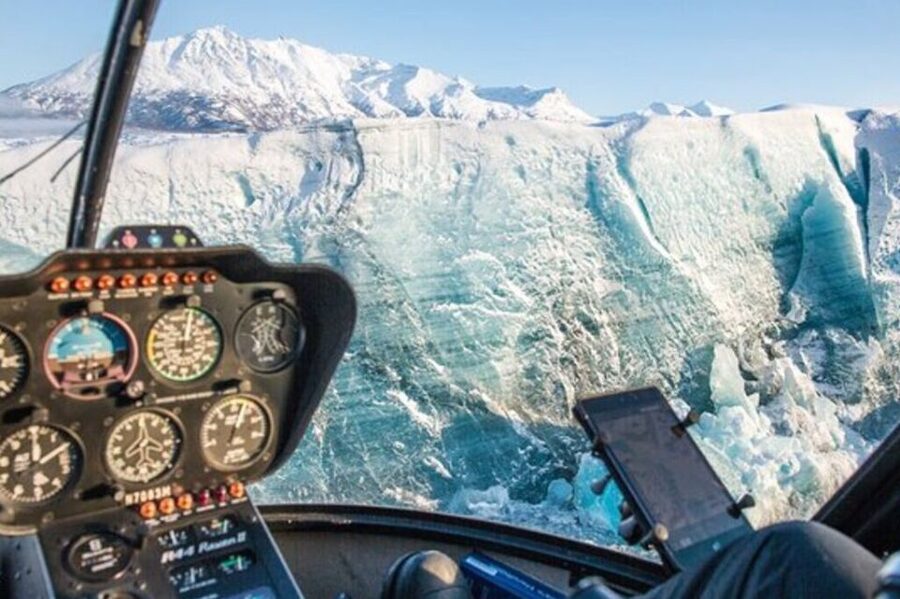
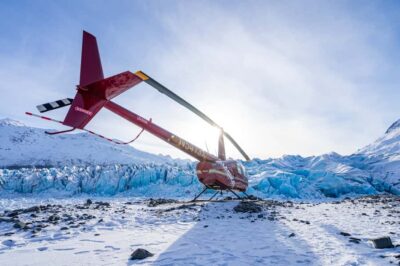
Your day starts with check-in at the front desk at Alaska Glacier Lodge. From there, you’ll be set up for the helicopter portion described as departing from Knik River Lodge. It’s a key part of the value here: the helicopter isn’t just scenic sightseeing. It’s what makes landing on the glacier and reaching remote pools possible in a short time window.
Once you’re airborne, you’re getting a bird’s-eye education in how Southcentral Alaska lays out its ice systems. Even if you’re not a “glacier person,” there’s something instantly readable about how the terrain folds, how the rivers and valleys cut through, and how ice occupies space like it owns the map. You’ll feel the temperature difference long before you step outside—cooler air hits faster when you’re traveling over snow and ice.
This is also where you should mentally switch from “tourist mode” to “field mode.” Keep sunglasses on if it’s bright, charge your camera battery if you can, and expect you’ll want a steady grip for photos once you’re back down on the glacier. Helicopter flights can be smooth, but they still shake loose the loose lens cover and loose plans. I’d treat it like an outdoor sport day, not a casual walk.
More ways out to the Knik
The Dry Suit Setup: Why This Gear Changes Everything
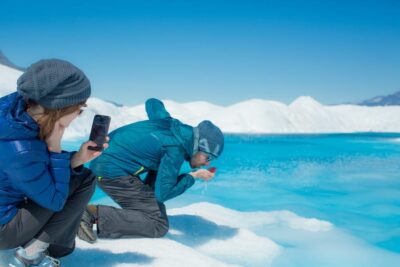
The centerpiece of comfort on a glacier water tour is the dry suit, and it’s included. This matters more than people expect. Cold-water experiences aren’t just about temperature; they’re also about how your body reacts when you’re suddenly in water that feels painfully fast. A dry suit changes that math and makes the time you spend practicing (and paddling) far more realistic.
You’ll also get all safety gear. That includes a flotation device, a leash, and a throw rope. They’re not adding these items for drama. Each one supports a practical safety plan: staying connected to your board, handling a slip, and giving a straightforward method to assist if needed.
On the gear side for paddling, you’ll get a paddleboard plus paddle micro-spikes. Those are a thoughtful inclusion. When you’re stepping around ice, tiny slip moments turn into big problems. Micro-spikes help you gain traction where you’re least expecting it.
One more detail: the guides come equipped with bear safety and medical rescue gear. That’s not something you see on every glacier tour listing, and it’s a big comfort boost. You’re still outdoors, still in nature, but you’re not relying on luck.
Landing on Knik Glacier Pools: The Feeling of Quiet Ice Country
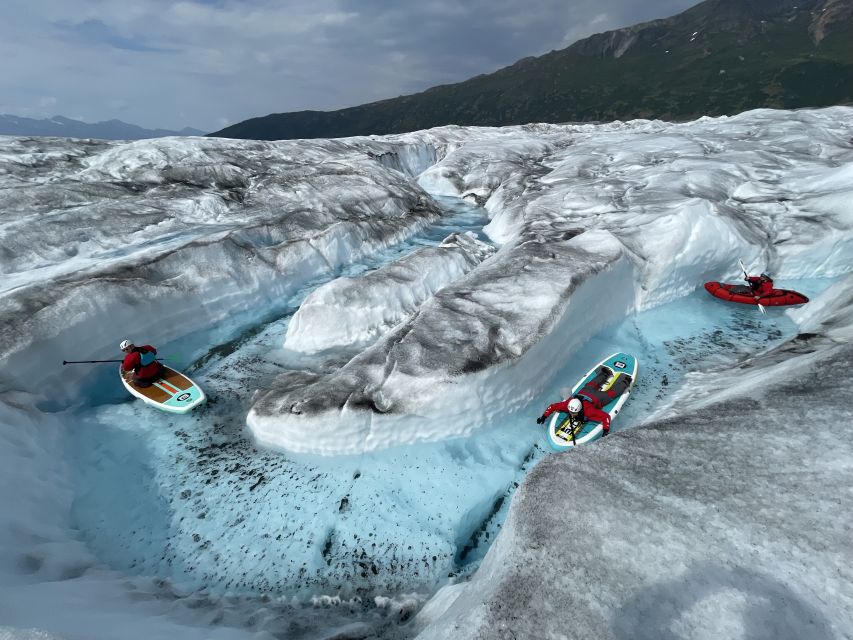
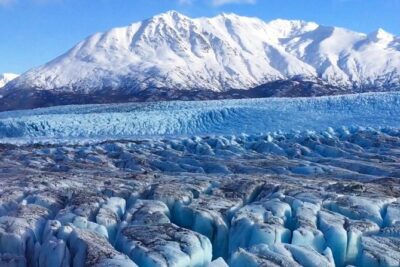
After the flight, you land and you’re basically walking into the kind of terrain that makes you lower your voice without meaning to. Knik Glacier is a major feature, and you’ll get time exploring vast ice fields and the glacier pools where paddling happens.
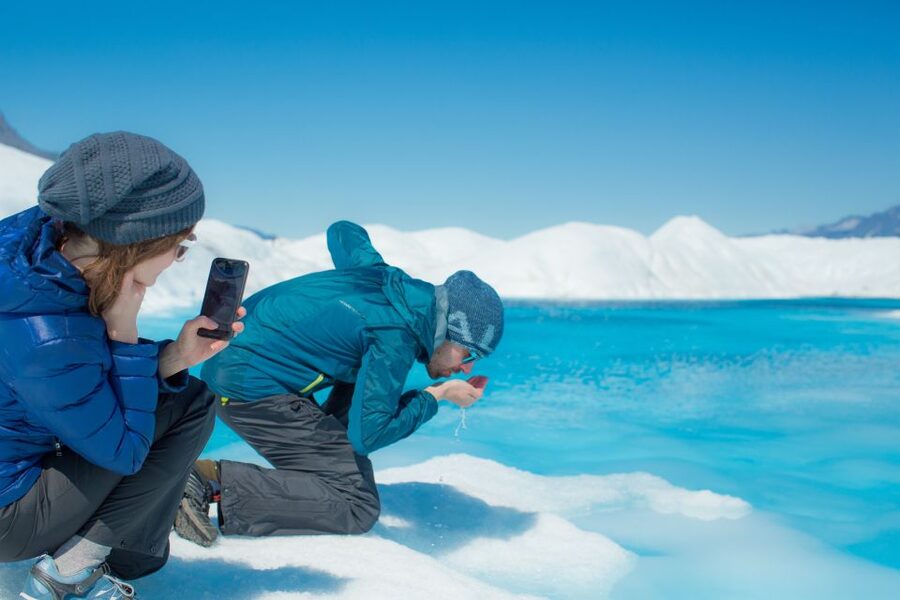
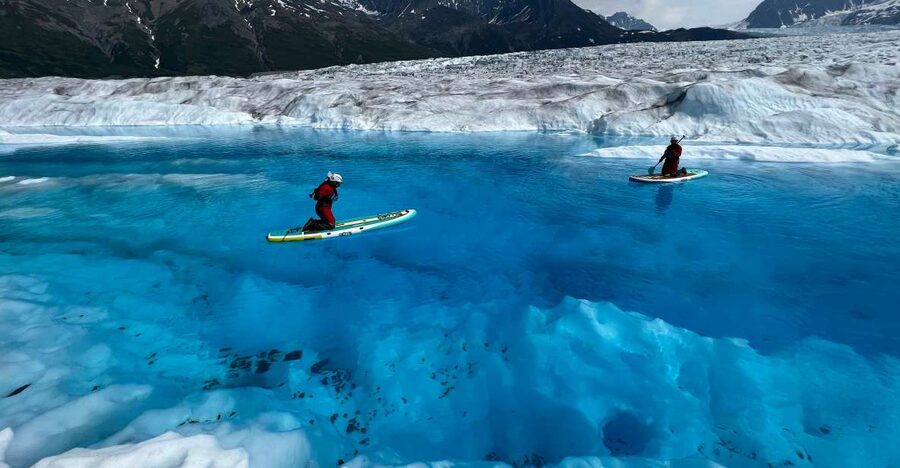
What makes the Knik Glacier pools special is how they balance motion and stillness. The waters are described as calming, which means you’re not fighting big waves while you’re still learning balance in cold conditions. Instead, you can focus on the feel of paddling across frozen or ice-adjacent water, noticing the strange textures of the shoreline and the way light plays off ice surfaces.
You’ll also get the kind of photos that happen only when you’re physically there. A glacier pool photo from a viewpoint looks one way. A glacier pool photo taken while you’re standing near it and then moving across it looks completely different. The ice isn’t just background. It’s the whole environment.
Cold-Water Practice: Short Jumps, Then Learn How to Get In and Out
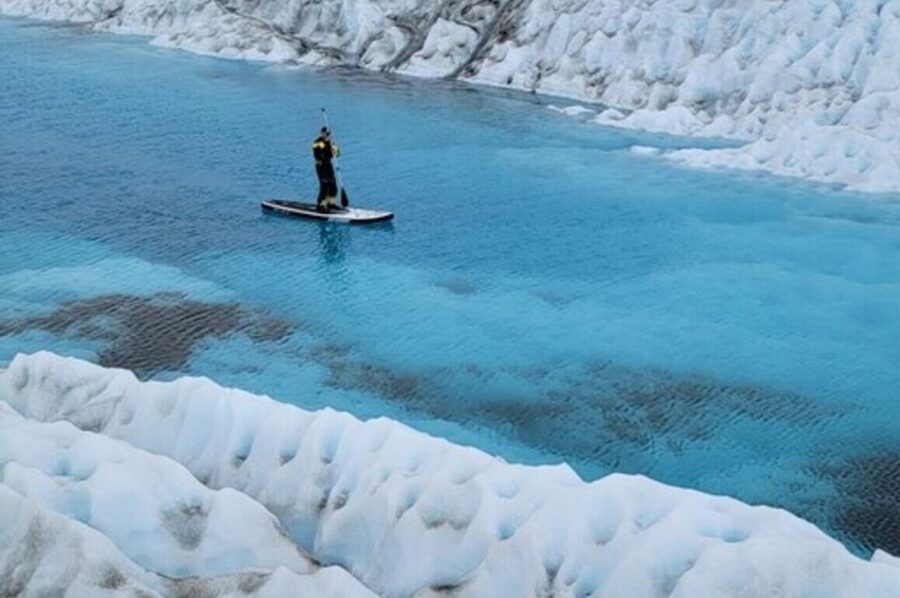
Here’s the part that turns this from a normal sightseeing helicopter tour into an action day. You’ll be geared up with your dry suit and safety equipment, then go into the freezing glacier water.
The day is set up with guided practice. Your guide will join you for a few jumps and then work with you until you’re comfortable with the mechanics of safely entering and exiting the water. The goal is simple: you don’t just jump once and hope for the best. You learn how to manage the moment when your body is surprised by cold, and you learn how to handle the transfer between solid ice and water.
Then comes the part that matters for confidence: a paddling lesson and safety demonstration. This covers what to do if you lose your balance. That’s huge for new paddlers, but it’s also smart for people who think they’re fearless. Water and ice don’t care about ego. A plan does.
If you’re someone who gets anxious when the temperature drops fast, this portion can feel like a lot before it becomes manageable. But the structure is what helps. You’re not thrown into the deep end. You’re coached until you can do it safely.
Solo Paddling on Calm Glacier Water: How to Make It Feel Serene
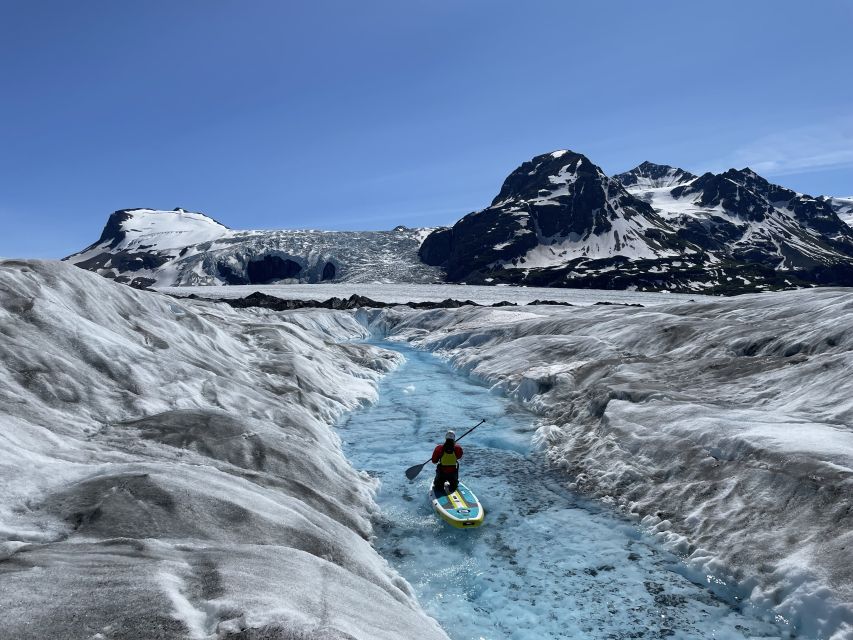
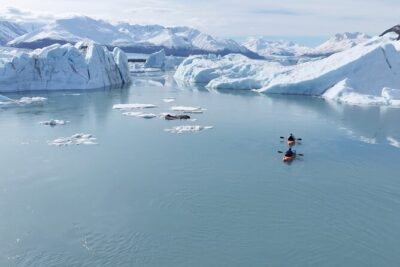
After you’ve practiced, you paddle solo into the lake for a serene trip through the frozen wonderland. Solo time is one of the quiet bonuses of this tour. Group paddles can be fun, but solo paddling in a controlled setting lets you slow down and actually notice the environment.
You’ll experience something rare in travel: stillness that’s not staged. The ice creates a natural hush, and the pool water described as calming helps you keep your strokes smooth. You’re not constantly bracing or correcting. Instead, you can focus on staying balanced, looking for the lines of ice around you, and letting the helicopter-in day turn into something almost meditative.
If you’re a stronger paddler, you’ll likely like the freedom to steer your own route. If you’re newer, you’ll probably appreciate that the conditions are set to be manageable, and that you’ve already done the safety walkthrough before you go off on your own.
Tip that comes from how these days usually play out: keep your body relaxed. When people tense up in cold, they tire faster and their paddle control gets worse. Smooth movements are your friend.
More of Alaska seen from the air
Lunch and Timing: A 4-Hour Day Built for Real Work, Not Waiting Around
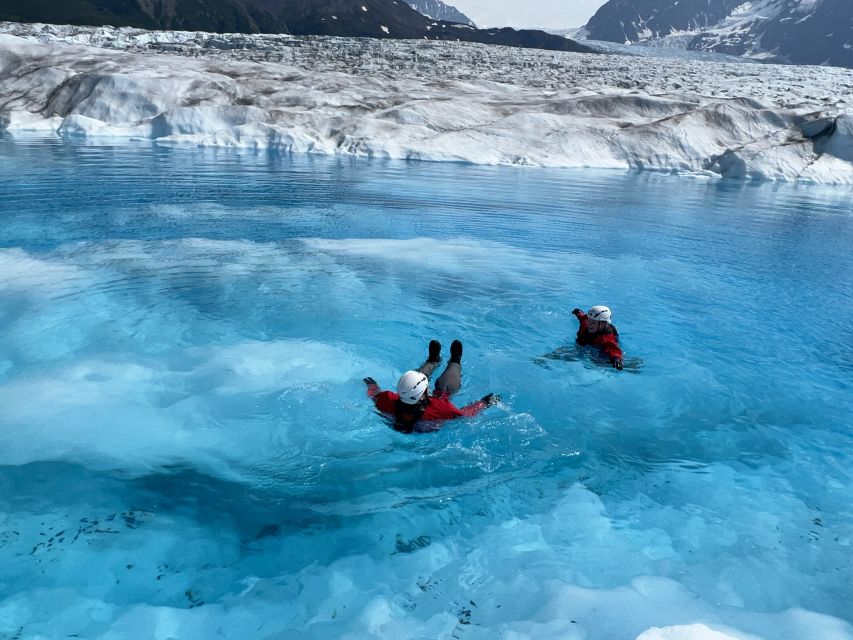
The total duration is 4 hours, and you’ll be outdoors for up to that amount. That time frame is tight enough to keep the adrenaline high, but long enough to include the real activities: flight, glacier landing, safety practice, lesson, solo paddle, and time exploring ice fields.
Lunch is included, which is a value add for cold-weather tours. In extreme cold, your body burns energy even when you’re just standing. Getting fed keeps your focus steady during the paddling and helps you avoid the cranky, shaky feeling that can ruin the experience.
A small note: the details state food isn’t included, while lunch is included. Practically, treat lunch as the planned meal. If you’re picky about snacks between activities, consider packing an extra small item you can eat later—just check with the operator about what’s allowed, since the tour notes say no alcohol and no extra items like weapons or sharp objects, and it also says no backpacks.
Price and Value: Is $1,415 Worth It?
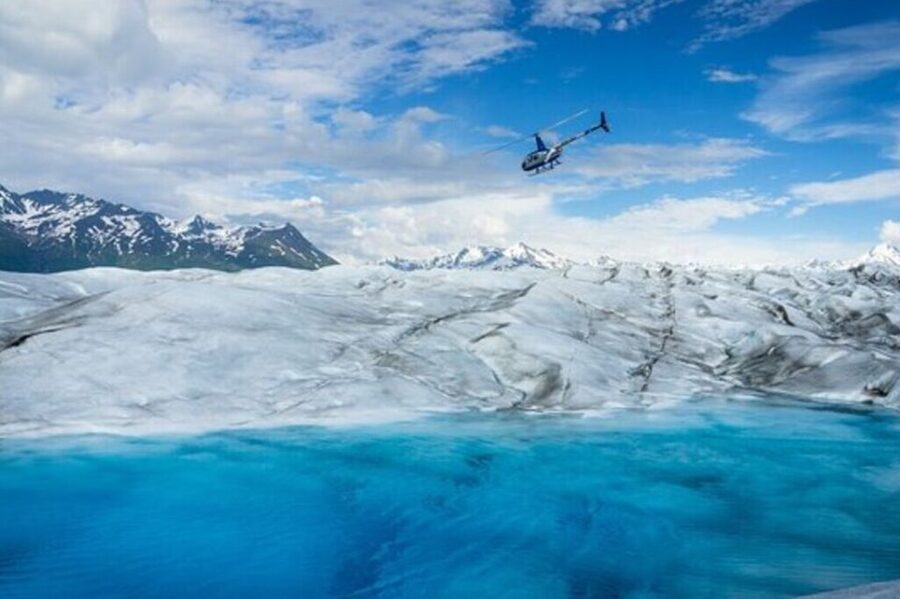
At $1,415 per person, this isn’t a casual add-on. You’re paying for three big things at once:
- Helicopter time that takes you to a glacier landing that most people will only ever see from the air or from far away.
- Specialized safety support and gear: dry suit, flotation device, leash, throw rope, paddleboard, and micro-spikes.
- Guided instruction that includes cold-water practice and safety demos, plus group size capped at 7.
In other words, you’re not just buying a view. You’re buying access and coached participation. If you want glacier scenery without the water and paddling, you’ll usually find cheaper options. But if you want the full package—ice under your boots, safety-supported water contact, and a paddle through glacier pools—this price starts to make sense.
The best way to judge value for yourself is to be honest about what you’ll do with that day. If you’ll show up nervous and then follow the plan, you’ll likely leave feeling proud. If you absolutely hate cold-water experiences or get motion-sick easily in helicopters, you may regret spending this kind of money.
Who This Tour Fits Best (and Who Should Skip It)
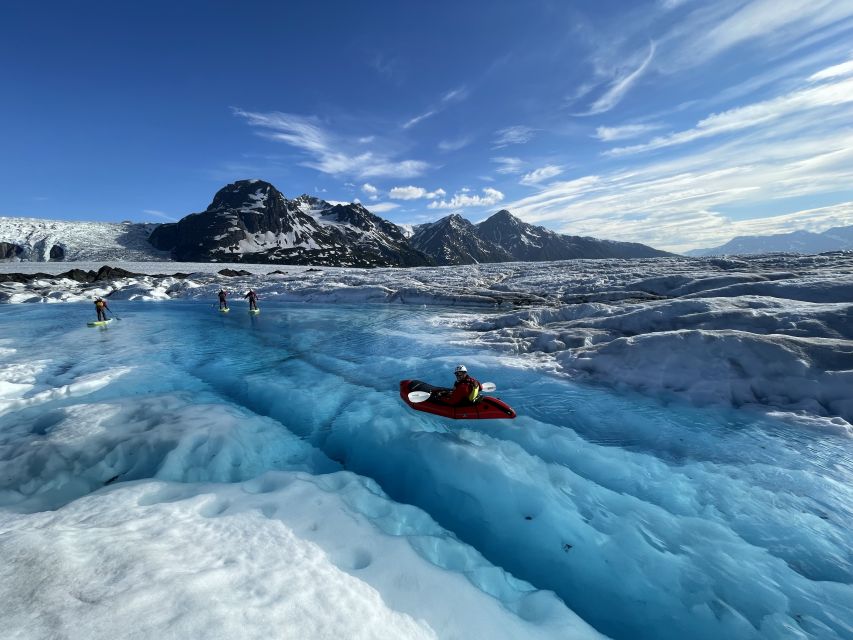
This tour is built for people who can handle extreme cold and have a moderate level of fitness. That’s because you’ll be suiting up, managing cold-water practice, and paddling after instruction.
It also isn’t for everyone. It’s not suitable for:
- pregnant women
- people with back problems
- people with mobility impairments
- wheelchair users
- people over 280 lbs (127 kg)
If you’re on the fence, think about your ability to move on uneven ice and your comfort with the idea of entering and exiting freezing water safely. The guides help, but you still need to participate.
Best fit: adventure-minded travelers who want both adrenaline and calm, and who don’t mind that the day depends on weather. You’re coming to Alaska to do something, not just to photograph something.
What to Bring (and What to Leave Behind)
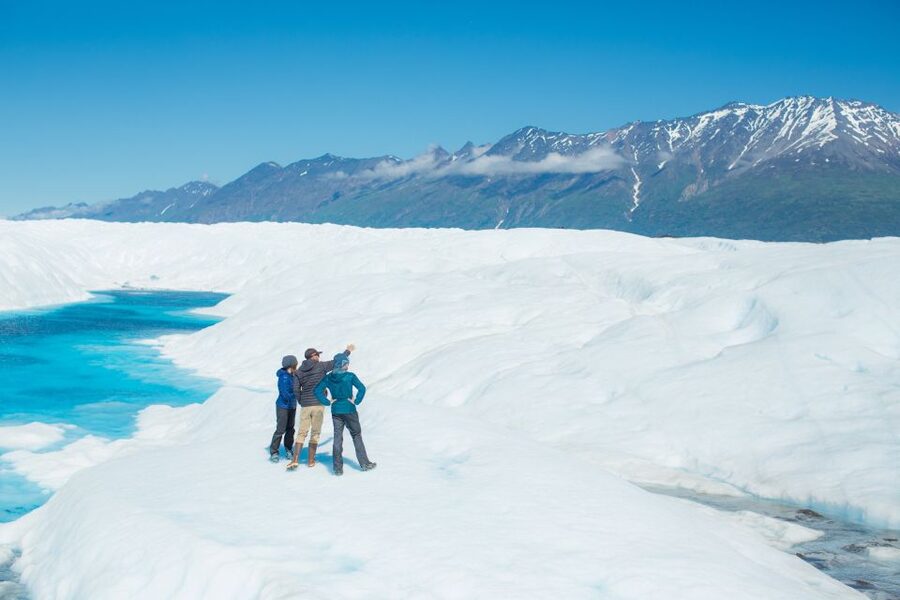
The tour tells you to bring warm clothing, sunglasses, camera, sunscreen, and a reusable water bottle. That makes sense. Even if you’re in a dry suit, you’ll still be changing in and out, walking around, and dealing with wind chill.
My practical checklist:
- Warm base layers you can layer without bulk
- Sunglasses (ice glare can be intense)
- Camera plus a plan to keep it protected from moisture
- Sunscreen (yes, even in cold)
- Reusable water bottle for hydration outside the lunch window
Not allowed items include weapons or sharp objects, backpacks, alcohol, and drugs. That’s pretty standard for wilderness safety, and it also keeps things simpler when you’re moving between ice and water.
Weather Reality: Why Your Day Can Change
Tours like this are weather-dependent, and you’ll be outdoors for up to 4 hours. That means the glacier day you imagine depends on the sky cooperating enough to fly and work safely.
So don’t plan this as your one unmovable item if you can avoid it. If your trip schedule is flexible, you’ll feel better about waiting for a good window. The operator’s small-group cap helps too, because it reduces chaos when conditions shift.
Should You Book the Knik Glacier Helicopter and Paddleboarding Tour?
Book it if you want a glacier experience that’s active, guided, and genuinely remote-feeling: helicopter access, gear you can trust, cold-water practice that builds confidence, and solo paddling on calm glacier pools. This is a rare mix of thrill and quiet.
Skip it if cold water scares you, you have mobility or back concerns, or you don’t tolerate extreme cold well. And if you dislike weather-dependent plans, make sure you can adapt your schedule.
If you do book, lean into the structure. Wear the warm layers, take the safety demo seriously, and give yourself permission to focus on the moment—because once you’re on Knik Glacier pools, that’s when the day turns from “tour” into a real memory.
FAQ
How long is the Knik Glacier Helicopter and Paddleboarding Tour?
The tour lasts 4 hours.
What’s included in the price?
Included are experienced guides, a dry suit, all safety gear (flotation device, leash, throw rope), a paddleboard and paddle micro-spikes, and lunch.
Where do I check in?
Check in with the front desk at Alaska Glacier Lodge.
Is pickup from Anchorage included?
No. Pickup and drop-off from Anchorage is not included, though transfers are available for purchase. You’ll need to arrange them with the activity provider after booking.
What should I bring for the tour?
Bring warm clothing, sunglasses, a camera, sunscreen, and a reusable water bottle.
What’s the main limit on who can join?
The tour is not suitable for pregnant women, people with back problems, people with mobility impairments, wheelchair users, or people over 280 lbs (127 kg). You also need a moderate level of fitness and tolerance for extreme cold.
On the Water Around Anchorage
- Glacier Blue Kayak & Grandview Tour★ 5.0 · 41 reviews
- Glacier Blue Kayaking – Knik Glacier Day Tour from Anchorage★ 5.0 · 17 reviews
- Knik River Lazy River Float Trip★ 5.0 · 3 reviews
- Full Day Guided Kayak Tour on Knik River★ 5.0 · 3 reviews
Alaska From Above
- Grand Knik Helicopter Tour – 2 hours 3 landings – ANCHORAGE AREA★ 5.0 · 374 reviews
- Anchorage Helicopter Glacier Dogsledding Tour★ 5.0 · 198 reviews
- Anchorage: Knik Glacier Helicopter Tour with Landing★ 4.9 · 58 reviews
- Anchorage: Grand Knik Glacier Helicopter Tour with Landings★ 5.0 · 19 reviews
Out to the Knik Glacier
- Grand Knik Helicopter Tour – 2 hours 3 landings – ANCHORAGE AREA★ 5.0 · 374 reviews
- Anchorage: Knik Glacier Helicopter Tour with Landing★ 4.9 · 58 reviews
- Anchorage: Grand Knik Glacier Helicopter Tour with Landings★ 5.0 · 19 reviews
- Glacier Blue Kayaking – Knik Glacier Day Tour from Anchorage★ 5.0 · 17 reviews
Fresh Off the Ice: New Anchorage Reviews
- Northern Lights UTV Tour with Roundtrip Transportation
★ 5.0 · 3 reviews - Knik River Lazy River Float Trip
★ 5.0 · 3 reviews - From Anchorage: Chugach State Park Walk with Naturalist
★ 5.0 · 3 reviews - Anchorage: Scenic Tour to Wildlife Center with hotel pickup
★ 5.0 · 3 reviews - Anchorage Brews Tour
★ 5.0 · 3 reviews - Full Day Guided Kayak Tour on Knik River
★ 5.0 · 3 reviews
Knik Glacier Tours, compared.
 ★ 5.0Grand Knik Helicopter Tour – 2 hours 3 landings – ANCHORAGE AREAFrom $761374 reviews
 ★ 4.9Knik Glacier Helicopter Tour with LandingFrom $47958 reviews
 ★ 5.0Grand Knik Glacier Helicopter Tour with LandingsFrom $76119 reviews
 ★ 5.0Glacier Blue Kayaking – Knik Glacier Day Tour from AnchorageFrom $59917 reviews
 ★ 5.0Knik River Lazy River Float TripFrom $2003 reviews
 ★ 5.0Full Day Guided Kayak Tour on Knik RiverFrom $3503 reviews
Browse the lists this tour appears in